Digestate
A circular solution
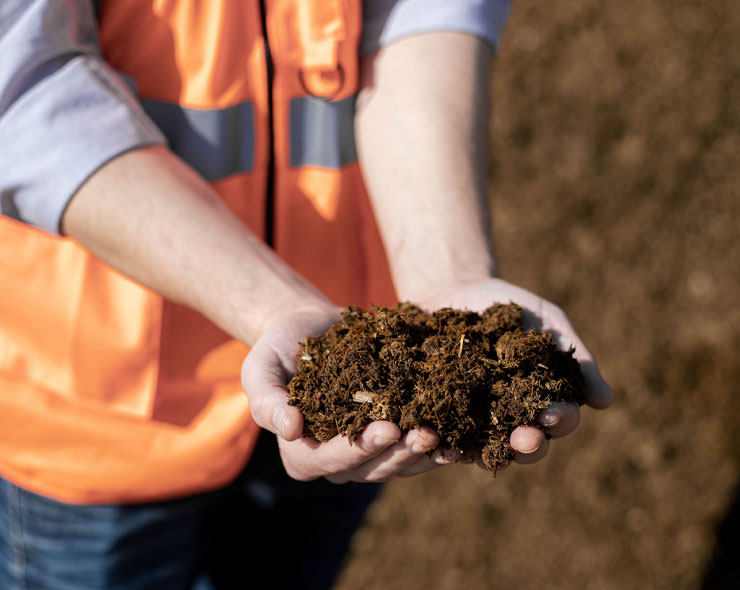
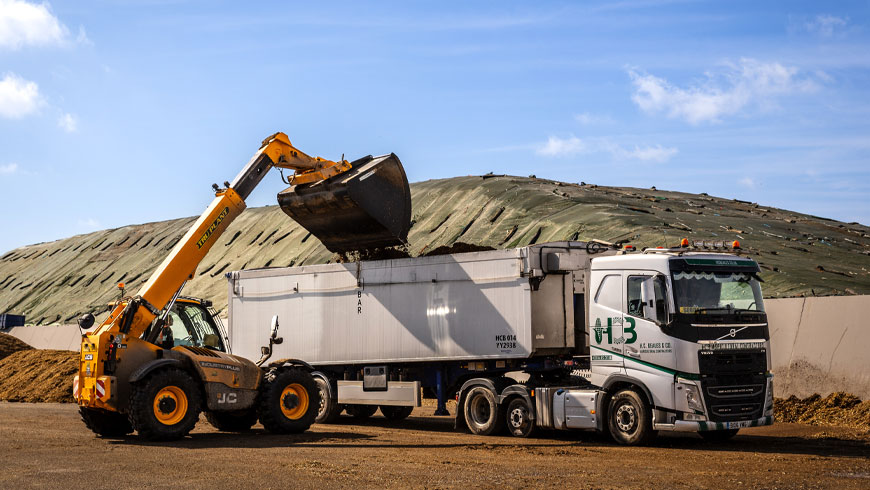
One of the important outputs from the biogas production is digestate – a powerful natural fertiliser. Returning digestate to the soil is fundamental to our working partnerships with farm businesses. Over the past 15 years, we have developed circular agreements with our growers, providing proportionate volumes of solid and liquid digestates as part of feedstock contracts. This has reduced growers’ reliance on carbon-intensive, artificial fertilisers and, following recent agricultural market volatility, made digestate a sought-after commodity.
Solid digestate provides organic matter and slow-release nutrients to the soil, improving soil structure and water holding capacity. It can also be used in a similar way to compost and help build long-term soil health.
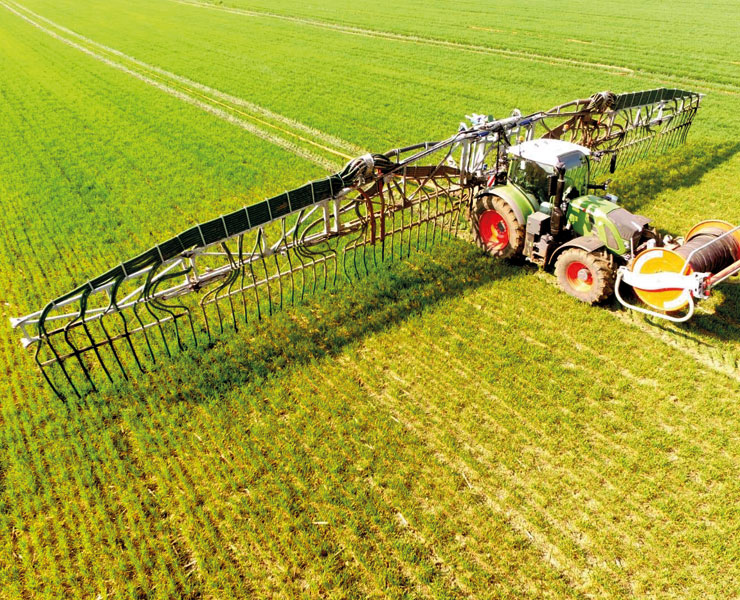
Liquid digestate is rich in readily available nitrogen, phosphate, potash, and other plant nutrients. From a carbon perspective, its most easily measurable benefit is the direct replacement of manufactured fertilisers.
- The return of organic matter to the soil
- Slow-release nutrients to the soil such as Nitrogen, Phosphorous, Potassium, Carbon.
- Improved soil structure
- Improved soil microbiome
- Improved water retention
- Improved future crop yields
A cost effective solution
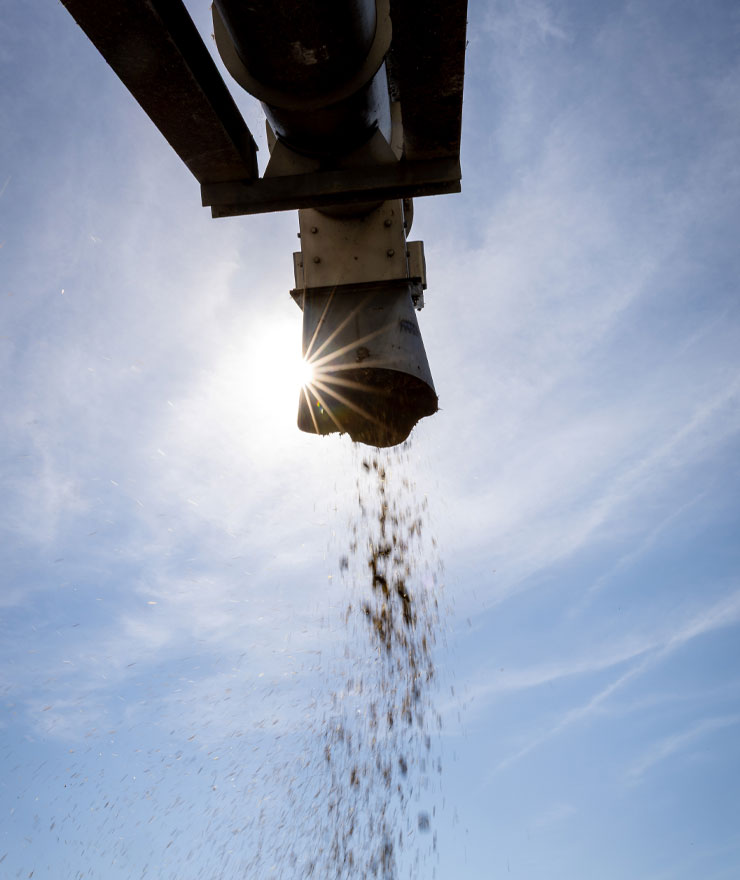
Displacing synthetic fertiliser
By contrast, synthetic fertilisers typically require large volumes of fossil fuels to produce and most are produced outside of the UK. The manufacturing process is a significant producer of greenhouse gas emissions.
Crops are the only feedstock we use in our newer plants. This means that the digestate we produce is 100% organic and falls outside of waste regulation such as Environmental Permitting, the British Standards Institute PAS110 specification and the associated current End of Waste framework, the Anaerobic Digestate Quality Protocol.
|
Nutrient |
Function in Soil / Crops |
Presence in Digestate |
|
Nitrogen (N) |
Promotes leafy growth and protein synthesis |
High — 2–6 kg/tonne (often ~50–70% as readily available ammonium-N) |
|
Phosphorus (P) |
Supports root development, energy transfer, and early plant growth |
Moderate — 0.3–1 kg/tonne |
|
Potassium (K) |
Enhances water regulation, enzyme activation, and overall plant resilience |
High — 1–5 kg/tonne |
|
Carbon (C) |
Builds soil organic matter, improves structure, supports microbial activity |
Moderate — especially in the solid fraction; essential for long-term soil health |
|
Sulphur (S) |
Vital for protein formation and enzyme function |
Low to moderate — often around 0.2–0.6 kg/tonne |
|
Magnesium (Mg) |
Central to chlorophyll, aids energy metabolism |
Moderate — commonly 0.2–0.4 kg/tonne |
|
Calcium (Ca) |
Improves soil structure, root health, and pH buffering |
Moderate — especially in solid fraction |
|
Zinc (Zn) |
Supports enzyme activity and growth regulation |
Trace — agronomically relevant in micronutrient-deficient soils |
|
Copper (Cu) |
Important for lignin synthesis and photosynthesis |
Trace — typically <0.01 kg/tonne |
|
Boron (B) |
Essential for cell wall formation and reproductive growth |
Trace — important in legumes, oilseeds, and brassicas |
|
Manganese (Mn) |
Supports chloroplast formation, enzyme function, and disease resistance |
Trace — beneficial for cereals and grassland |
|
Iron (Fe) |
Aids chlorophyll synthesis and electron transport |
Trace — usually present but largely unavailable unless chelated |